
Targeted Pressure Work on Sensitive Muscle Areas
Trigger point therapy in Yakima for clients experiencing localized muscle tenderness, referred discomfort, or areas that resist standard massage
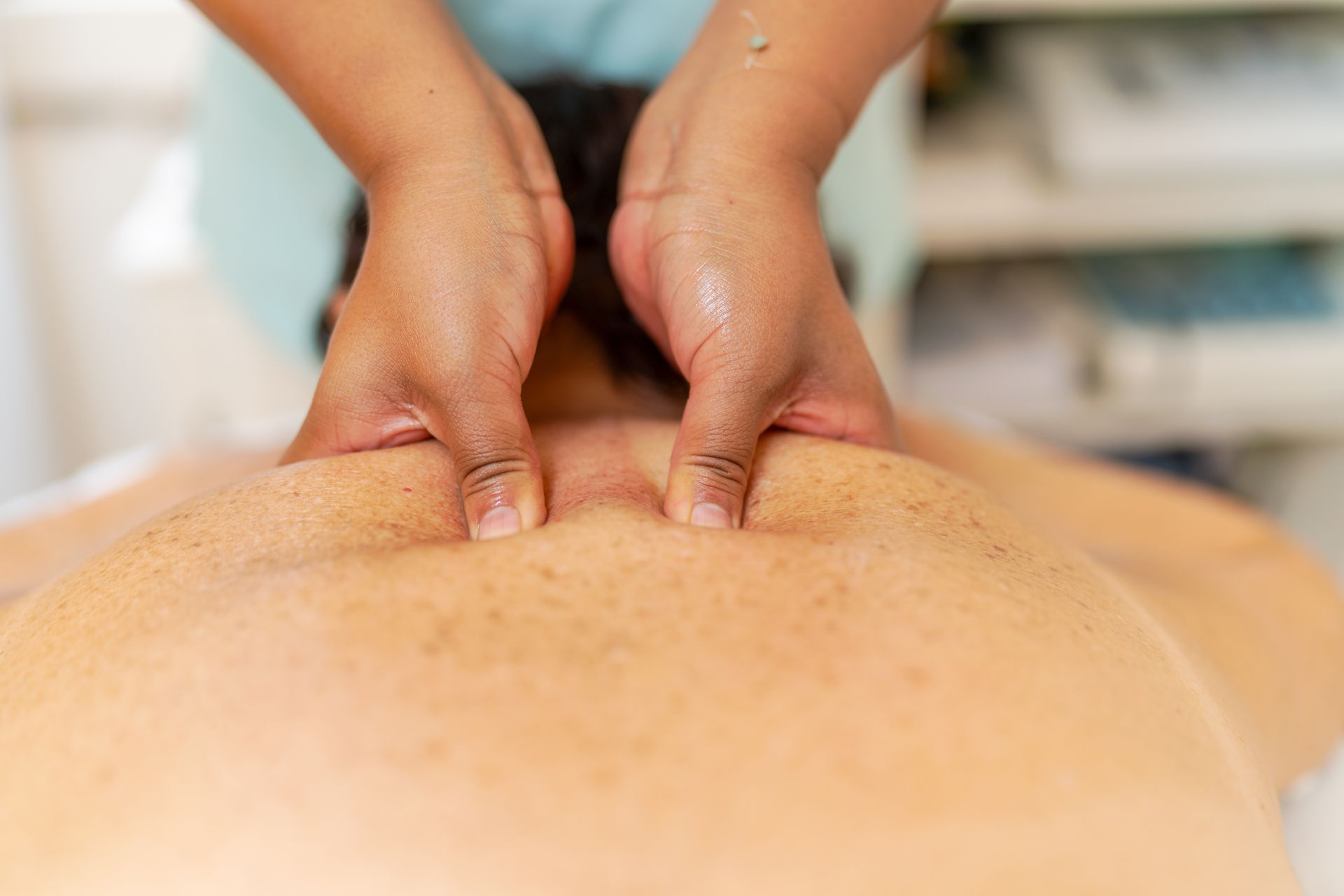
Neck and shoulder tension that sends sensation into the arm, or a knot in the upper back that reliably aches when pressed — these are patterns that point toward specific concentrated areas of muscle dysfunction rather than generalized tightness. Trigger point therapy focuses on those sensitive zones, applying targeted pressure to address localized tenderness and the referred discomfort that often travels from them. DCS Therapeutic Massage incorporates trigger point work into individualized massage sessions in Yakima, structuring the approach around what the therapist identifies during assessment and what the client reports about how and where their tension presents.
The session begins with the therapist assessing the client's areas of concern, identifying specific spots within the muscle that are producing the reported pattern, and applying pressure adjusted to the client's tolerance and response. Clients are expected to communicate during this process — feedback about whether pressure is producing the characteristic referred sensation, increasing into sharp pain, or causing numbness or tingling directly shapes how the therapist adjusts technique in real time. Disclosing relevant medical conditions before the session, particularly any involving nerve symptoms or musculoskeletal diagnoses, ensures the work proceeds appropriately.
To have your specific areas of tension evaluated and discuss whether trigger point therapy fits your situation, set up an appointment with DCS Therapeutic Massage.
The Difference Between Trigger Point Work and General Deep Pressure
Trigger point therapy is not simply deep tissue massage applied to a smaller area. The distinction lies in the intent and the method: deep tissue massage uses sustained, slower strokes to work through layers of muscle broadly, while trigger point therapy applies stationary or nearly stationary pressure to a precisely identified spot with the goal of releasing a concentrated area of hyperirritability within the muscle fiber. The therapist locates these spots through palpation — feeling for the taut band of muscle that produces a jump response or the familiar referred sensation when pressed — before applying pressure at the level that engages the point without pushing past productive tolerance.
After trigger point work, clients often notice that the predictable ache or tightness they could reliably reproduce by pressing a specific spot is reduced or absent. Areas that referred sensation into the arm, head, or chest during the session may feel quieter and less reactive in the day or two following treatment. The results are observable in ways that differ from general relaxation massage — a specific, previously consistent pattern of tenderness is no longer producing the same response.
Trigger point therapy is frequently integrated with other massage techniques within the same session rather than used as the sole method. The therapist determines what proportion of the session is devoted to trigger point work based on the number of active points identified, the client's tolerance, and how the tissue responds as the session progresses. Clients who experience sharp pain, sudden numbness, or tingling that differs from the expected referred sensation pattern should communicate that immediately so the therapist can adjust.
What Property Owners Ask About the Work
Trigger point therapy involves a level of client participation and body awareness that differs from passive massage, and several practical questions come up consistently before and during first sessions.
How does the therapist locate trigger points during a session?
The therapist uses palpation — pressing systematically along the muscle and its associated taut band — to identify spots that produce a local twitch response or that replicate the referred sensation pattern the client has described. This process requires the client to provide feedback about where they feel the pressure and what sensation it produces.
What does the referred sensation from a trigger point feel like, and how is it different from sharp pain?
Referred sensation from a trigger point is typically described as a dull ache, pressure, or traveling sensation that moves into a predictable pattern away from where the therapist is pressing. Sharp, shooting pain or sudden numbness differs from this pattern and is a signal to communicate immediately so the therapist can reassess the approach.
How is the appropriate pressure level determined for trigger point work in Yakima clients with varying pain tolerance?
The therapist applies pressure incrementally and asks the client to rate or describe the sensation — the goal is to reach the level that engages the point and produces the characteristic referred sensation without crossing into a pain range that causes the muscle to guard. That threshold varies considerably between individuals and even between different areas of the same client's body.
What should a client expect in the day or two following a trigger point session?
Mild soreness in the areas that received direct pressure is common and typically resolves within 24 to 48 hours. Clients are generally advised to drink water, avoid intense physical activity on the treated areas immediately after the session, and take note of whether the referred sensation pattern they came in with has changed.
How does trigger point therapy fit within a standard massage appointment rather than replacing it entirely?
Trigger point work is generally integrated into a session alongside broader massage techniques, with the therapist allocating time to targeted points and then using longer strokes to address the surrounding tissue and support circulation in the area. The balance between focused and broad work is determined by the client's presenting concerns and how the session unfolds.
DCS Therapeutic Massage also provides trigger point therapy to clients in Union Gap, Selah, Moxee, Wapato, and West Valley. To describe your specific tension patterns and find out how trigger point work might be structured for your session, connect with DCS Therapeutic Massage directly.