Jaw Muscle Work That Reaches the Source
Intra-Oral Massage in Yakima for TMJ dysfunction, restricted jaw opening, and facial pain that outside work cannot fully address
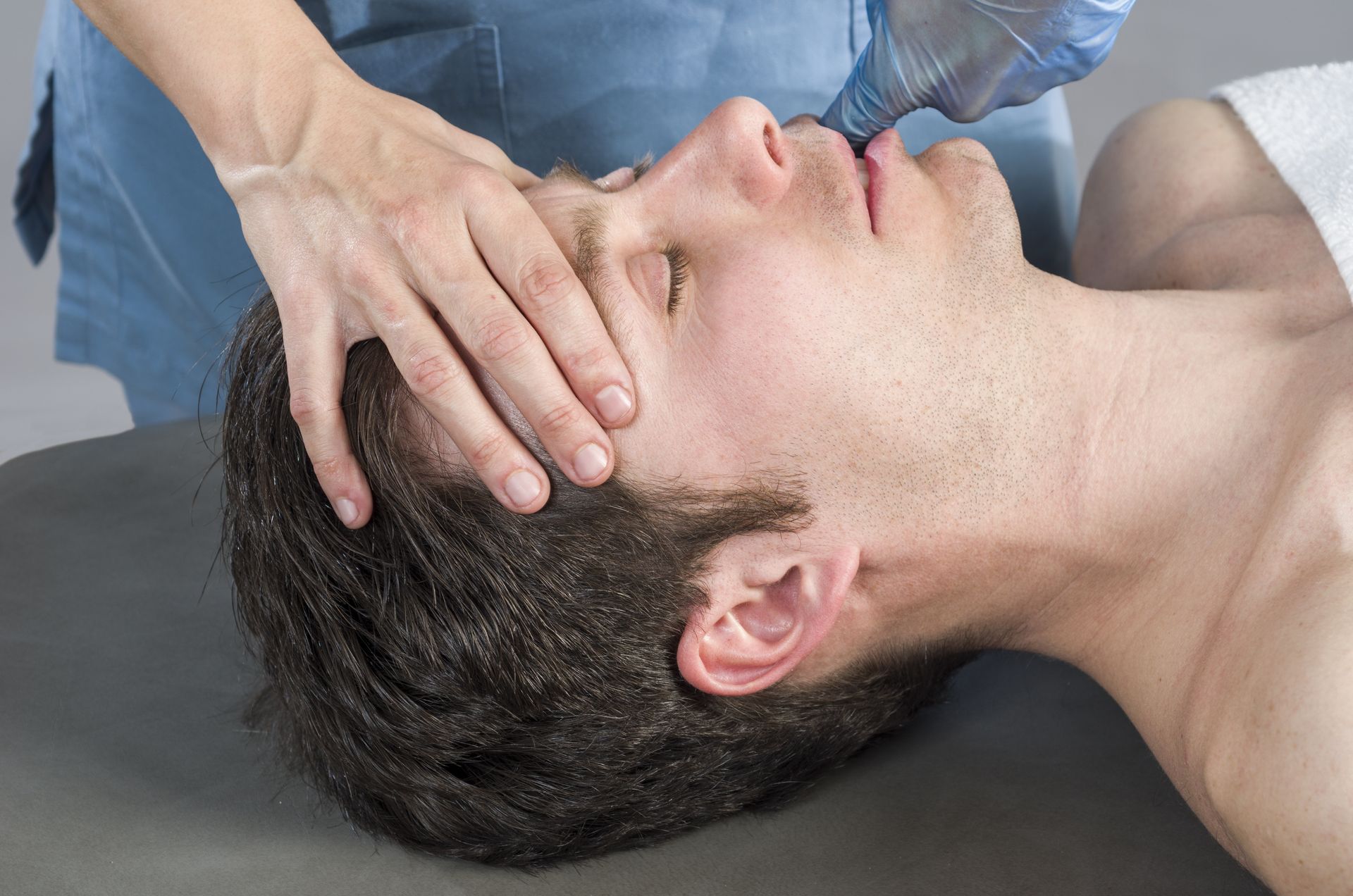
Applying pressure to the outside of the jaw addresses only a portion of the muscle tissue driving TMJ dysfunction. The masseter, pterygoid, and temporalis muscles have fibers and attachment points that are only accessible from inside the mouth, which is why clients with chronic jaw pain, restricted opening, or facial pain often find that standard massage produces limited or temporary results. DCS Therapeutic Massage offers certified intra-oral massage in Yakima, a specialized technique performed inside the mouth with gloved hands to reach the muscles that exterior work cannot fully contact.
Before treatment begins, the therapist reviews your specific jaw complaint—whether that is restricted range of motion, clicking or popping, pain during chewing, or symptoms consistent with trigeminal neuralgia or a jaw injury. The therapist then works inside the mouth on the masseter, temporalis, and pterygoid muscles, releasing tension patterns that restrict how the jaw opens and closes. Intra-oral massage is regularly paired with myofascial release of the head and neck. Sessions fit within the standard 30 to 90 minute booking window, and gloves are worn throughout the intra-oral portion of the work.
Intra-oral massage is billed to insurance with a valid prescription. Contact DCS Therapeutic Massage to describe your jaw symptoms and find out how an intra-oral session would be structured for your specific situation.</the>
Why Intra-Oral Technique Works for TMJ Conditions
The pterygoid muscles—medial and lateral—sit in a position that makes them physically unreachable through external massage. These muscles are directly involved in the chewing cycle and in the unconscious clenching and grinding patterns that are among the most common jaw complaints reported by Yakima Valley patients. Because clenching and nighttime grinding place sustained isometric load on these muscles, tension accumulates in fibers that sit too deep and too medially to respond to thumb pressure applied through the cheek. Intra-oral work allows the therapist to contact those fibers directly and apply the sustained release pressure that the tissue actually requires.
After an intra-oral session, clients typically notice a measurable change in how wide the jaw opens and a reduction in the pulling or aching sensation that appears during chewing or speaking. The change is often most obvious the first time you yawn or open wide after the session—the range that felt blocked or stiff becomes available with less resistance. For clients dealing with facial pain patterns tied to trigeminal neuralgia, the session addresses the muscular component of that presentation, though the therapist's intake process determines whether and how the work proceeds based on your specific history.
Intra-oral massage addresses the muscular contributors to TMJ dysfunction and jaw restriction, but it is not a replacement for dental or medical evaluation of the joint structure itself. For clients whose jaw complaints involve both muscular tension and structural concerns, coordinating with a dentist or oral specialist alongside massage work is a reasonable approach. DCS Therapeutic Massage's certification in this technique distinguishes it from general jaw massage and reflects training specific to intra-oral anatomy and protocol.
Common Questions About the Work Itself
The following questions cover what intra-oral massage involves, which conditions it is suited for, and what clients should expect before and during the session.
What muscles does intra-oral massage target and why are they significant?
The masseter, temporalis, medial pterygoid, and lateral pterygoid muscles are all treated; the pterygoids in particular are only accessible from inside the mouth, and they are frequently the source of the deep jaw aching and restricted opening that does not respond to external massage.
How does the therapist work safely inside the mouth during the session?
Gloves are worn throughout the intra-oral portion, and the therapist applies sustained directional pressure to each muscle group in sequence rather than using any instrument—only the gloved hand contacts the tissue.
What jaw complaints are appropriate for intra-oral massage?
TMJ dysfunction, jaw injuries, restricted range of motion, pain during chewing or speaking, and facial pain patterns including presentations associated with trigeminal neuralgia are all conditions the therapist is trained to work with. The work is regularly paired with myofascial release of the head and neck, and it is billed to insurance with a valid prescription.
Why does grinding and clenching cause the kind of tension that standard massage cannot fully resolve?
Clenching places the pterygoid and deep masseter fibers under sustained isometric contraction that builds cumulative tightness; because those fibers are positioned medially and deep to the cheek, thumb pressure applied externally compresses tissue but never actually contacts the source of the restriction.
How should you describe your jaw symptoms to the therapist before an intra-oral session in Yakima?
Be specific about when pain occurs—during chewing, at rest, on waking, or during wide opening—whether you notice clicking or locking, how long the symptoms have been present, and whether you have had any dental work or jaw injury that may be relevant to how the session is structured.
DCS Therapeutic Massage also provides intra-oral massage in Union Gap, Selah, Moxee, Wapato, and West Valley. Call (509) 453-1420 to speak directly with DCS Therapeutic Massage about your jaw symptoms and arrange an appointment.