
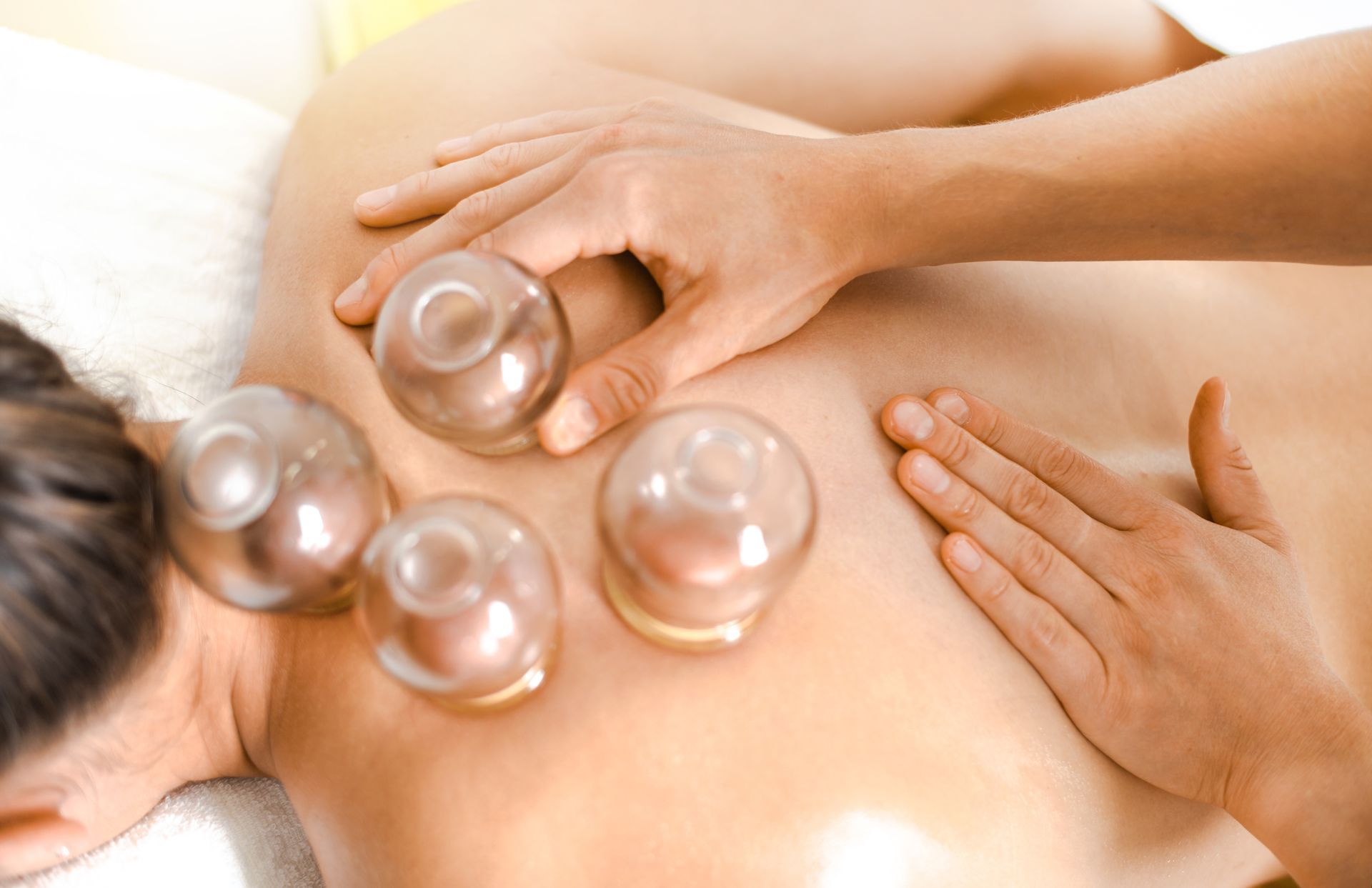
Specialized Suction Technique for Muscle Tension
Cupping therapy in Yakima for clients dealing with persistent muscle tightness, soreness, or areas of deep tissue discomfort
DCS Therapeutic Massage offers cupping therapy in Yakima as part of an individualized approach to therapeutic bodywork. Clients who carry chronic tension in the back, shoulders, or legs often find that conventional pressure-based techniques address the surface layer but leave deeper restriction untouched. Cupping works differently by lifting tissue rather than compressing it, which is why it draws interest from people whose tension patterns haven't responded to standard massage alone.
Before any cupping session begins, the therapist evaluates the client's needs, reviews relevant medical conditions, current medications, and skin sensitivities, and determines whether cupping is appropriate as a standalone service or incorporated alongside massage work. This intake step is not a formality — certain conditions and medications affect how skin and underlying tissue respond to suction, and that information directly shapes the approach taken during the session.
Arrange a consultation with DCS Therapeutic Massage to discuss your specific areas of concern and whether cupping is appropriate for your situation.
How Cupping Addresses Tissue Restriction
Cupping therapy uses specialized cups applied to the skin to create controlled suction, drawing superficial tissue upward rather than pressing downward into muscle. The therapist positions cups based on the areas of tension identified during the intake evaluation, and the duration and placement are adjusted according to the client's comfort and how the tissue responds during the session. Because suction draws blood and fluid toward the surface layer, clients often notice temporary circular marks on treated areas — these are not bruises in the clinical sense and typically resolve within several days.
After a session, clients commonly report a sense of looseness or reduced tightness in the treated areas, along with a noticeable difference in how the muscle moves under their own movement. Areas that previously felt dense or knotted may feel more pliable immediately following treatment, though the full effect often becomes more apparent in the day or two that follow as tissue settles.
Cupping may be integrated into a broader massage session rather than used in isolation, depending on what the therapist determines is most appropriate for the client's presenting concerns. Clients who have had recent skin procedures, open wounds, active inflammation, or certain circulatory conditions should discuss those details during intake, as they affect whether and how cupping can be applied safely.
What to Know Before Your First Session
Cupping is a technique with specific preparation and aftercare considerations that differ from standard massage. The following questions address what clients most commonly want to understand before their first appointment.
What does cupping actually involve during the session?
The therapist places cups — typically made of silicone or another material suited to the application — on the skin and creates suction either by squeezing the cup or using a pump mechanism. Cups may be left stationary or moved along the muscle, depending on the treatment goal and the client's comfort level throughout the process.
How does the therapist decide where to place the cups?
Placement is determined by the areas of tension or restriction identified during the intake conversation and the therapist's hands-on evaluation of the tissue. The goal is to address specific zones rather than apply cups uniformly, which is why the pre-session discussion about your concerns matters.
Why do temporary marks appear after cupping, and how long do they last?
The circular discoloration that sometimes follows cupping results from increased circulation in the treated area, not from tissue damage. In most cases, the marks fade within a few days, though clients with certain skin types or circulatory patterns may notice them lasting slightly longer.
How should you prepare your skin before a cupping appointment in Yakima?
Arriving with clean, lotion-free skin on the areas to be treated helps the cups seat properly. Drinking water before and after the session supports circulation, and clients are generally advised to avoid vigorous activity immediately following treatment.
When is cupping not the right choice for a session?
Cupping is not appropriate for clients with active skin conditions, open wounds, certain vascular conditions, or those on medications that significantly affect clotting or skin integrity. The therapist reviews this information during intake and will recommend an alternative approach if cupping is not suitable.
DCS Therapeutic Massage also provides cupping therapy to clients in Union Gap, Selah, Moxee, Wapato, and West Valley. To take the next step, contact DCS Therapeutic Massage directly to discuss your muscle tension concerns and confirm whether cupping is the right approach for your session.