Targeted Work on the Muscles Causing Neck Pain
Neck and shoulder pain massage in Yakima for trapezius, levator, and upper back tension that limits movement
Neck and shoulder tension tends to concentrate in a predictable set of muscles — the trapezius, the levator scapulae, and the muscles running along the upper back — and those muscles respond to a specific kind of sustained, targeted pressure rather than general rubbing. DCS Therapeutic Massage in Yakima has operated since 2013, with three licensed therapists who assess posture, range of motion, and where tension sits before beginning work, then address the neck, shoulders, and upper back with a combination of kneading and sustained pressure targeted at specific trigger points. Both standard therapeutic sessions and medical massage billed to insurance are available for qualifying patients.
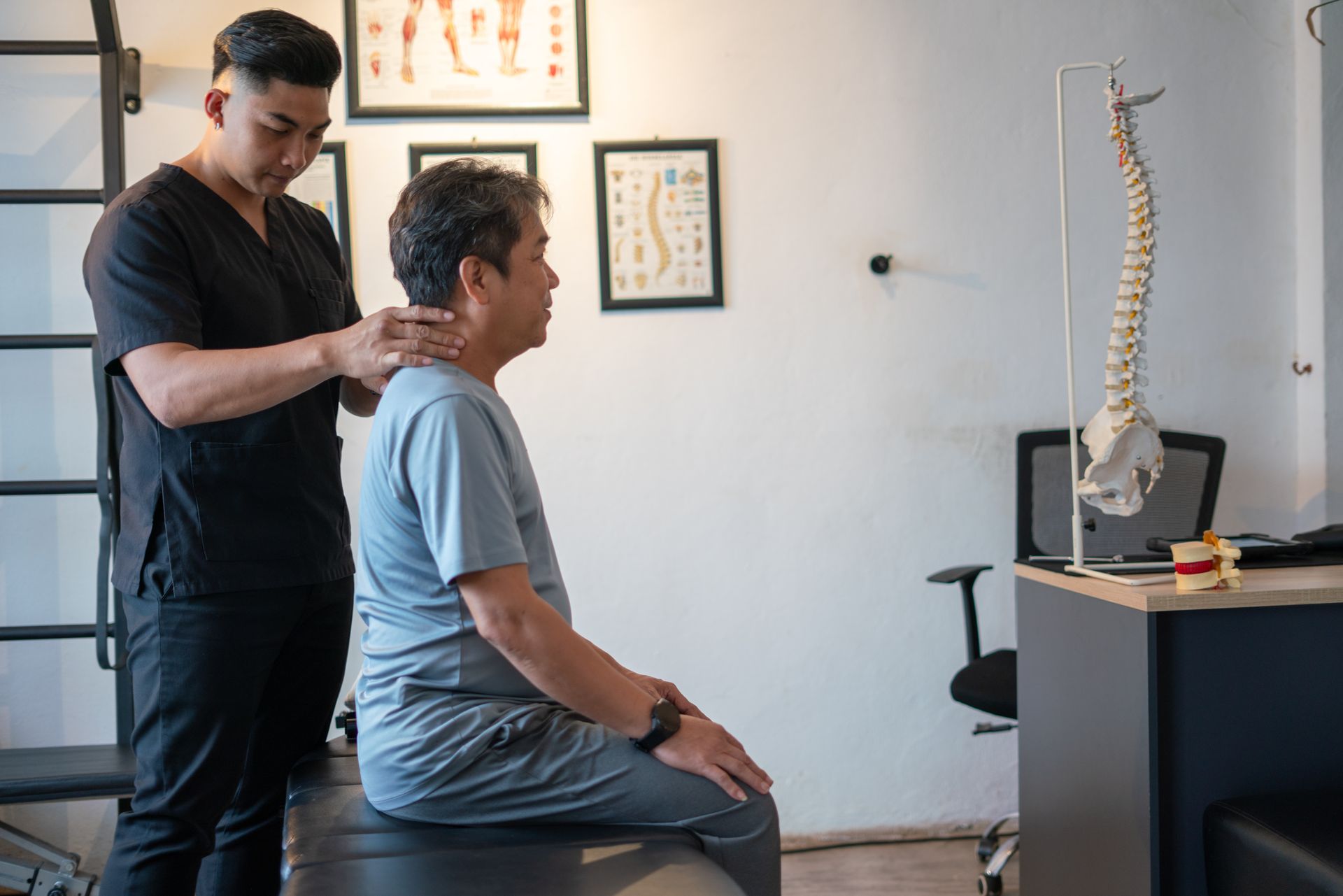
The session begins with an assessment of your posture and how freely your neck and shoulders move — information that tells the therapist not just where you feel pain, but which muscles are the primary source and which have tightened in response. From there, the work focuses on the actual structures involved: the upper trapezius, which commonly develops trigger points that refer pain into the neck and base of the skull, the levator scapulae along the side of the neck, and the rhomboids and mid-trapezius in the upper back that brace when the shoulders are chronically forward. Sessions run 30 to 90 minutes, and medical sessions require a provider prescription.
To schedule a session focused on neck and shoulder pain, contact DCS Therapeutic Massage at (509) 453-1420 and describe where your restriction and discomfort are concentrated.
The Difference Between Trigger Point Work and General Shoulder Massage
A trigger point in the trapezius or levator is a small, hyperirritable spot within the muscle fiber that does not release with broad pressure passing over it — it requires direct, sustained contact held at the right depth until the referral pattern begins to dissipate and the local fiber lets go. That is a different action than general shoulder kneading, which increases circulation and reduces surface-level tension but does not reach the specific sites driving referred neck and skull pain. The therapist at DCS Therapeutic Massage locates those points by palpation and works each one with the pressure and duration it needs rather than treating the whole shoulder as a uniform area.
After a session focused on the neck and upper back, you will notice that turning your head to either side requires less effort, that the dense, ropey quality in the upper trapezius is reduced, and that any referred pressure you were feeling at the base of the skull or behind the eye has diminished. For people doing repetitive lifting or extended driving along the valley routes — patterns that load the levator and upper trapezius without the counterbalancing movement that would normally release them — that change after a session is measurable in how far the head turns and how long it takes for the familiar tension to rebuild.
Neck and shoulder sessions at DCS Therapeutic Massage can be scheduled as standard therapeutic appointments or, for patients with a documented condition and a provider prescription, as medical massage billed to insurance. The intake at the start of the session determines which approach applies and how the therapist sequences the work across the neck, shoulders, and upper back based on what the assessment shows.
Answers About How the Work Is Done
The following addresses how neck and shoulder massage sessions are structured, what the therapist assesses before beginning, and how the work adapts to different presentations of upper body tension — including patterns commonly seen among Yakima residents in physically demanding or posture-intensive occupations.
How does the therapist assess neck and shoulder tension before starting the session?
The therapist evaluates your resting posture, asks you to move your head and shoulders through their range of motion, and palpates the key muscles to locate areas of guarding, trigger points, and density. That assessment determines where the session focuses and in what order the therapist works through the structures.
What is the levator scapulae and why is it commonly involved in neck pain?
The levator scapulae runs from the top of the shoulder blade up to the cervical vertebrae, and it is one of the primary muscles that limits neck rotation when it becomes shortened or develops trigger points. People who hold a forward head posture for long periods — at a desk, behind a wheel, or on a device — tend to load this muscle chronically, which is why it is one of the first areas assessed in a neck complaint.
How does trigger point work in the trapezius address pain felt in the head and neck?
The upper trapezius contains trigger points that refer sensation into the side of the neck, behind the ear, and at the base of the skull. Sustained pressure applied directly to those sites causes the referral pattern to activate briefly and then fade as the fiber releases — a process the therapist manages by monitoring your response and adjusting depth throughout.
When does neck and shoulder work in Yakima require a provider prescription?
A prescription is required when the session will be billed to insurance as medical massage — typically when the complaint is a documented injury from an auto collision, a workplace incident, or another covered event. Standard therapeutic sessions for general tension or chronic discomfort are self-pay and do not require a referral.
How long does it typically take to notice lasting improvement in neck and shoulder mobility?
That depends on how long the pattern has been present and how consistently sessions are scheduled. Acute tension from a specific event often responds more quickly than chronic restriction that has developed over years of postural loading. Regular sessions maintain the progress by preventing the same trigger points from re-establishing fully between visits.
DCS Therapeutic Massage also performs neck and shoulder pain massage in Union Gap, Selah, Moxee, Wapato, and West Valley. To arrange a session and describe the specific areas where tension and restriction are most limiting, call DCS Therapeutic Massage at (509) 453-1420.